How to Create Your Own Blog
Method 1 of 3: Choosing a Blog
Choose a blog host. Hosting is the web platform that you will use to run your blog. With the development of the Internet, dozens of blog hosts are becoming more famous and popular, and many of them are quite easy to use even for those who are not very computer savvy. There are both free hosting and paid services. Here are some examples:
Free blog hosting:
Wordpress network
Blogger
Posterous
Tumblr
Paid blog hosting:
GoDaddy
bluehost
HostGator
hostmonster
Advertising
Determine how important your blog URL is to you. If you're on a free platform, your blog URL will look something like this:
Image titled Create a Personal Blog Step 2www.myblog.wordpress.com/
If you are planning to start a personal blog and do not intend to develop your own brand or interact with other bloggers, free hosting is fine for you. If you're hoping to one day make your blog public, a paid blog service will allow you to create a blog with a custom URL. In this case, your blog address will look something like this:
www.alittlebitofblog.com
Learn the differences between free and paid services. As a rule, paid hosting offers the user more flexible settings for the appearance of the site, as well as a wider range of web tools for personalizing the blog - plugins, widgets, buttons, and more. Since an amateur blogger is unlikely to need paid blogging services, it will be useful for him to know what a free blogging platform can and cannot do:
As a rule, free hostings offer a limited set of blog design templates. A paid service provides the user with a wider choice of appearance settings, as well as the ability to independently design their own blog from scratch.
Some plugins are only available as part of paid hosting services. A plugin is a tool that allows you to customize your blog. Image titled Create a Personal Blog Step 3 For example, Rotating Tabs is a great plugin that allows blog visitors to see more content in rotating tabbed panels. Paid hosts offer an endless number of other plugins and tools.
To summarize the above: If you want to create a diary to record your own thoughts, then all these gadgets will be redundant. But if the design of your blog is important to you, you plan to one day attract readers to your page and want to create some useful tools for their convenience, a wider set of plugins and functions will undoubtedly come in handy.
Familiarize yourself with all the features and functions of the platform you choose. How do you want to highlight headings? How will you arrange external links to other sites? These are the questions you will have when you start creating your own blog. While you will certainly become familiar with the capabilities of the chosen service as you work with it, it is very important to learn as many of its features as possible in advance. The only way to learn them is to experience them in practice.
Some blog hosts offer interactive video tutorials or slide shows for new users. If your platform of choice provides similar guides, be sure to check them out. They will offer you a lot of useful tips and tricks and help you quickly master the functionality of the platform.
INTERESTING VIDEO


Share this Post
Related posts
How To Create a Blog on Blogspot
Blogger is a resource that allows you to create your own blog (website) for free. The blogging platform is very simple and…
Read More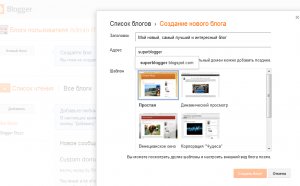
How to Create a Blog on Google
Blogger requires a compatible browser and operating system. Browsers: Google Chrome; Safari 4 and later; Firefox…
Read More


